Tina Meier · 19 September 2026
Weather Anomalies Trigger Chain Reactions from Crop Cycles to Bird Habitats Across the Valley
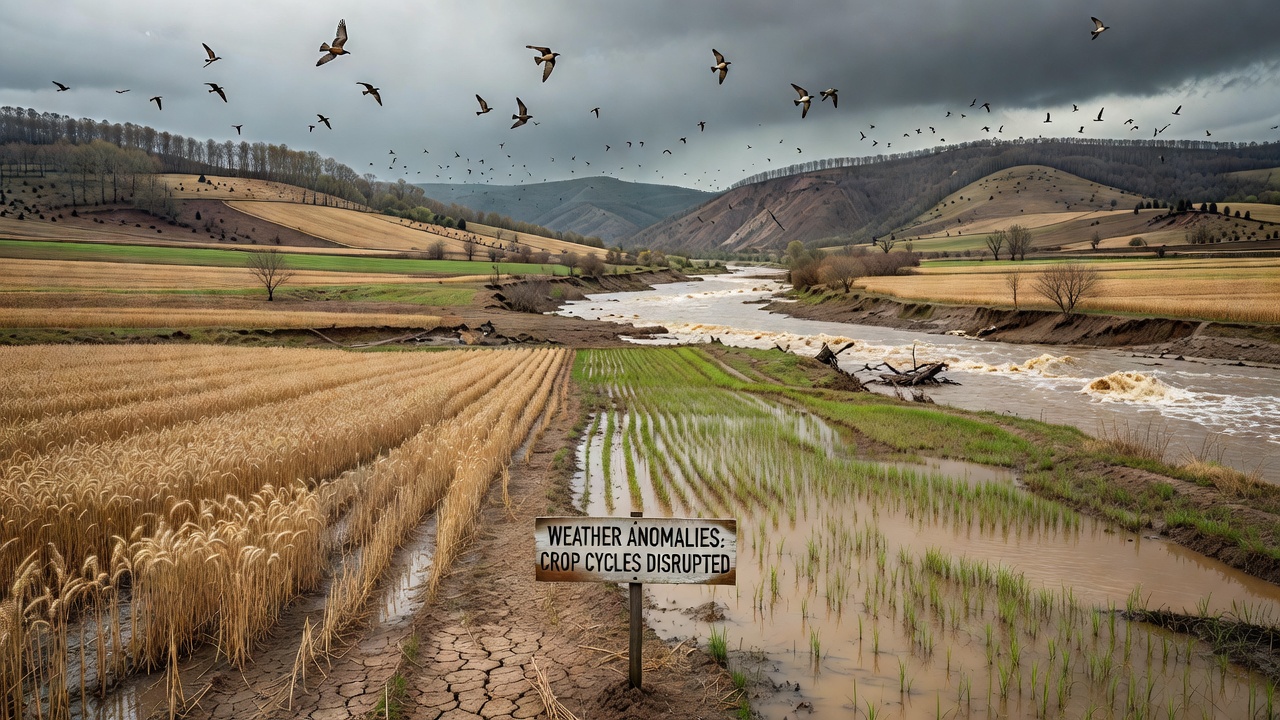
Weather anomalies observed across the valley in September 2026 have set off measurable shifts in crop development timelines, and these changes extend directly into altered insect populations and bird foraging patterns, according to data compiled by regional environmental monitoring networks. Unseasonal temperature spikes combined with irregular rainfall patterns disrupted standard planting and harvest schedules for several staple crops, while the resulting vegetation stress created ripple effects that researchers tracked through successive ecological layers.
Shifts in Crop Development Timelines
Monitoring stations recorded average temperatures running 2.8 degrees Celsius above the 30-year September baseline, and precipitation arrived in concentrated bursts rather than steady distribution. These conditions delayed wheat maturation by approximately 12 days in lower elevation fields, whereas vineyards experienced accelerated grape ripening that compressed the typical harvest window into a narrower period. Agricultural extension services noted that soil moisture retention varied sharply between clay-rich and sandy zones, producing uneven growth rates within the same valley corridors.
Yield forecasts issued by local cooperatives showed a projected 9 percent reduction in grain output compared with the previous five-year average, while vegetable plots recorded higher incidence of fungal pressure after late-month humidity spikes. Irrigation systems operated at elevated capacity to offset the erratic rainfall, drawing additional water from shared aquifers and prompting coordinated allocation discussions among downstream growers.
Insect Population Responses and Food Web Adjustments
Entomological surveys conducted mid-September documented an earlier emergence of certain pollinator species alongside a measurable decline in late-season aphid colonies that normally support migratory songbirds. The compressed flowering periods reduced nectar availability during peak migration windows, forcing some insect groups to concentrate in remnant hedgerow corridors where floral resources persisted longer.
Researchers from the European Environment Agency have documented comparable patterns in other Mediterranean-adjacent valleys, where temperature-driven phenological mismatches propagate through trophic levels within weeks rather than months. In the current valley setting, reduced insect biomass in open fields coincided with increased activity along riparian buffers, concentrating available prey near water sources that remained cooler and more stable.
Bird Habitat Utilization Patterns
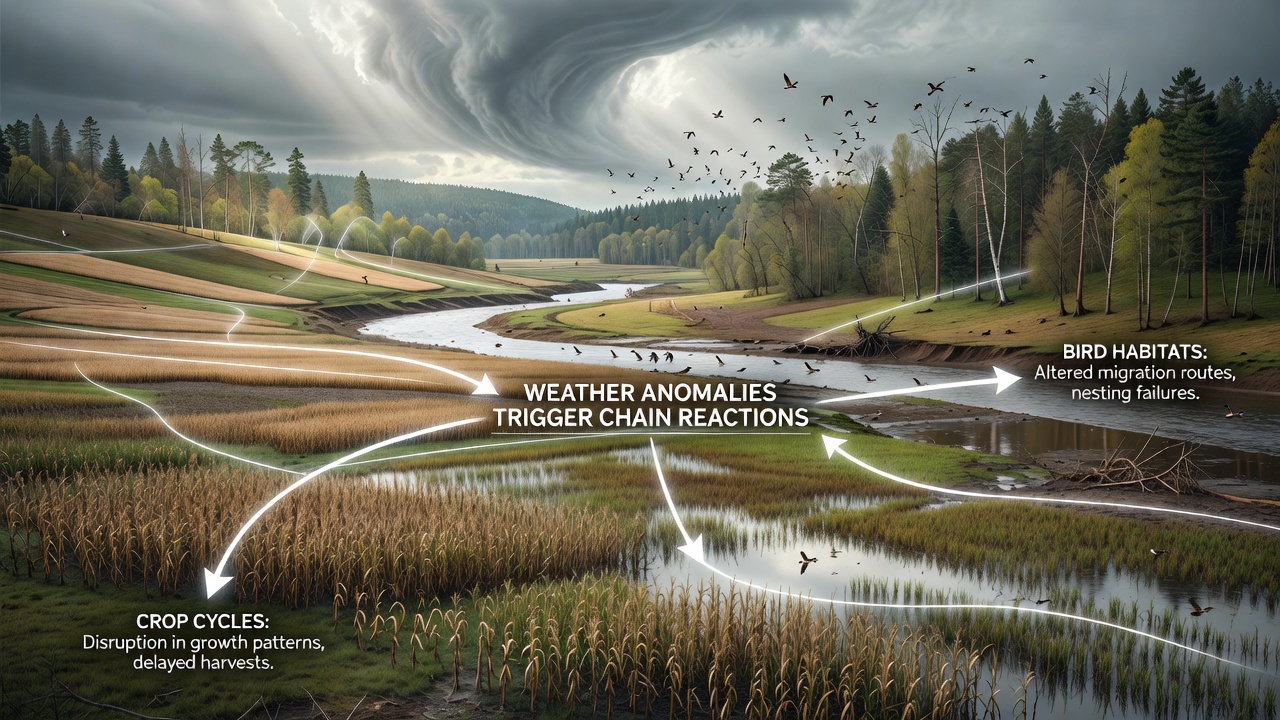
Avian monitoring transects revealed that several ground-foraging species adjusted their daily movement ranges, shifting from traditional stubble fields to orchard margins where residual fruit and associated insects remained accessible. Warbler and thrush counts at established mist-netting stations declined by 14 percent during the first three weeks of September, while raptor sightings increased along the same routes as prey animals sought concentrated cover.
Breeding records from earlier in the season indicated that some resident species completed second broods ahead of schedule, leaving fledglings to disperse into habitats already experiencing resource compression. Wetland-adjacent reed beds retained higher humidity levels that supported continued insect activity, drawing water-associated birds into narrower geographic bands and increasing observed territorial interactions at those sites.
Broader Valley Ecosystem Linkages
Soil scientists tracking microbial activity under altered moisture regimes reported accelerated decomposition rates in surface layers, releasing nutrients at times that did not align with peak crop uptake periods. This temporal offset contributed to elevated nitrate leaching into shallow groundwater during subsequent rainfall events, a process monitored through paired lysimeter arrays installed across representative farm parcels.
Wildlife corridor connectivity studies noted that hedgerow networks continued to serve as refugia for both insect and avian species, yet fragmentation from expanded field margins reduced the effectiveness of these linear habitats in some sectors. Data collected through automated acoustic sensors showed shifts in dawn chorus composition, with certain species vocalizing at altered frequencies and durations consistent with changed foraging pressures.
Conclusion
Continued observation through late 2026 will clarify whether these September anomalies represent isolated events or part of a sustained trend, while integrated datasets from crop, insect, and avian monitoring programs provide the quantitative basis for evaluating long-term habitat resilience across the valley system. Coordinated reporting from multiple agencies supports ongoing assessment of how initial weather deviations translate into sequential ecological adjustments.