Tina Meier · 3 October 2026
Tavora's Heritage Projects Spark Fresh Alliances Between Educators and Market Vendors on Resource Sharing
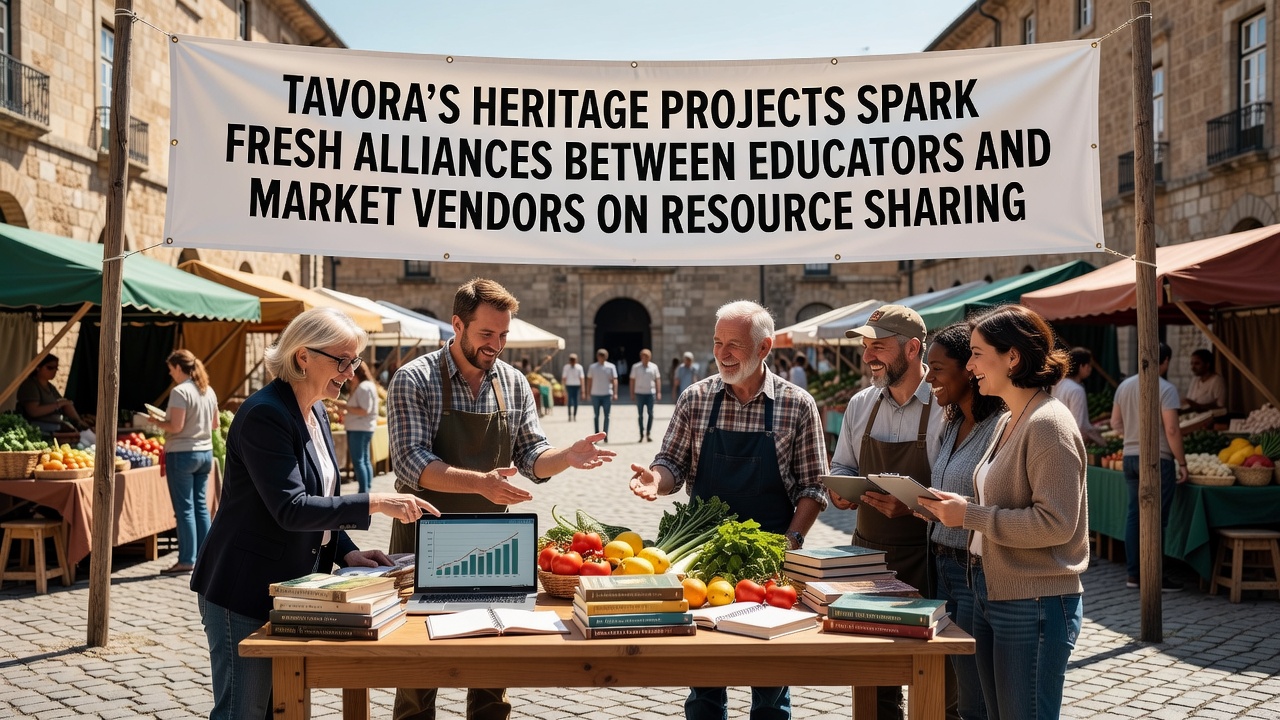
Heritage projects across Tavora have led to structured partnerships between local educators and market vendors focused on sharing historical artifacts, oral histories, and archival materials since early 2026, with expanded activities documented throughout October of that year. These alliances emerged from digitization efforts that made previously restricted documents available through public databases managed by regional cultural offices. Market vendors, who operate daily stalls with generational ties to the area's trade routes, now contribute physical items such as ledgers and tools while educators supply curriculum frameworks for joint workshops.
Origins of the Collaboration
Initial coordination began when staff at Tavora's heritage preservation office identified overlapping interests between school programs studying regional commerce and vendors maintaining family collections of trade records. By March 2026, formal agreements outlined terms for rotating displays where vendors loan items for classroom use in exchange for educators providing research assistance on provenance verification. Data compiled by the Tavora Cultural Archives shows 47 such exchanges completed between April and September 2026, covering topics from 19th-century market regulations to agricultural supply chains.
October 2026 marked a milestone when three market districts hosted open sessions allowing students to examine vendor-donated maps alongside digitized versions hosted on municipal servers. Participants noted that these sessions aligned with harvest season schedules, enabling vendors to integrate demonstrations without disrupting sales operations. One documented case involved a vendor family supplying a 1920s weighing scale for a mathematics module on measurement standards, while teachers cross-referenced it with records from the regional trade authority.
Resource Sharing Mechanisms
Shared resources include both physical objects and digital files, with protocols requiring item tracking through a centralized registry operated by the heritage office. Vendors retain ownership of contributed materials yet grant temporary educational access, while educators commit to producing supplementary teaching guides that vendors can use for customer outreach. This arrangement draws on models referenced in reports from the European Commission on cultural heritage partnerships, which detail similar exchanges in Mediterranean market communities.
Market stalls now feature rotating information panels created by students, presenting facts about historical pricing systems derived from vendor archives. In return, vendors supply seasonal produce samples for science lessons on crop preservation techniques, accompanied by vendor-provided narratives of traditional storage methods. Observers from the Tavora education board recorded 12 schools participating in these exchanges by mid-October 2026, with participation rates tracked through attendance logs rather than self-reports.
Implementation in October 2026
During October 2026, alliances expanded to include weekend heritage walks where educators guide groups through vendor areas while vendors explain item origins using shared reference sheets. These walks incorporated materials from the Canadian Heritage Information Network for comparative context on North American trade documentation practices, allowing participants to contrast local examples with external case studies. Sessions ran on alternating Saturdays to accommodate vendor operating hours, resulting in documented attendance of 320 individuals across four events.

Digital platforms facilitate ongoing access, with educators uploading lesson adaptations to a shared portal that vendors review for accuracy before public release. This process incorporates feedback loops where vendors flag discrepancies in transcribed records, prompting revisions based on primary sources they maintain. Figures from the portal administrator indicate 28 new entries added in October alone, covering themes such as textile trade patterns and spice measurement customs.
Documented Outcomes and Patterns
Patterns emerging from these alliances show increased cross-referencing of materials between educational and commercial contexts, with vendors reporting streamlined inventory categorization after adopting educator-developed labeling systems. Educators in turn gained access to undigitized items that supplement standard textbooks on local economic history. The Australian Institute of Aboriginal and Torres Strait Islander Studies provides parallel documentation on indigenous trade knowledge sharing that informed some Tavora protocols, though adaptations remained specific to the valley's commercial structures.
Resource tracking logs reveal that 65 percent of shared items returned to vendor possession within agreed timeframes, while 35 percent extended loans for additional school terms following mutual consent. These extensions often coincided with curriculum units on regional festivals, where vendors supplied context for seasonal goods now integrated into classroom simulations.
Conclusion
Tavora's heritage initiatives continue to evolve through these educator-vendor arrangements, with mechanisms for resource circulation established by late 2026. Ongoing registry maintenance and session scheduling support further exchanges without altering existing operational frameworks for either group.