Zara Klein · 31 October 2026
Market vendors leverage restored heritage sites as pop-up hubs while navigating commuter disruptions and shifting trade rules
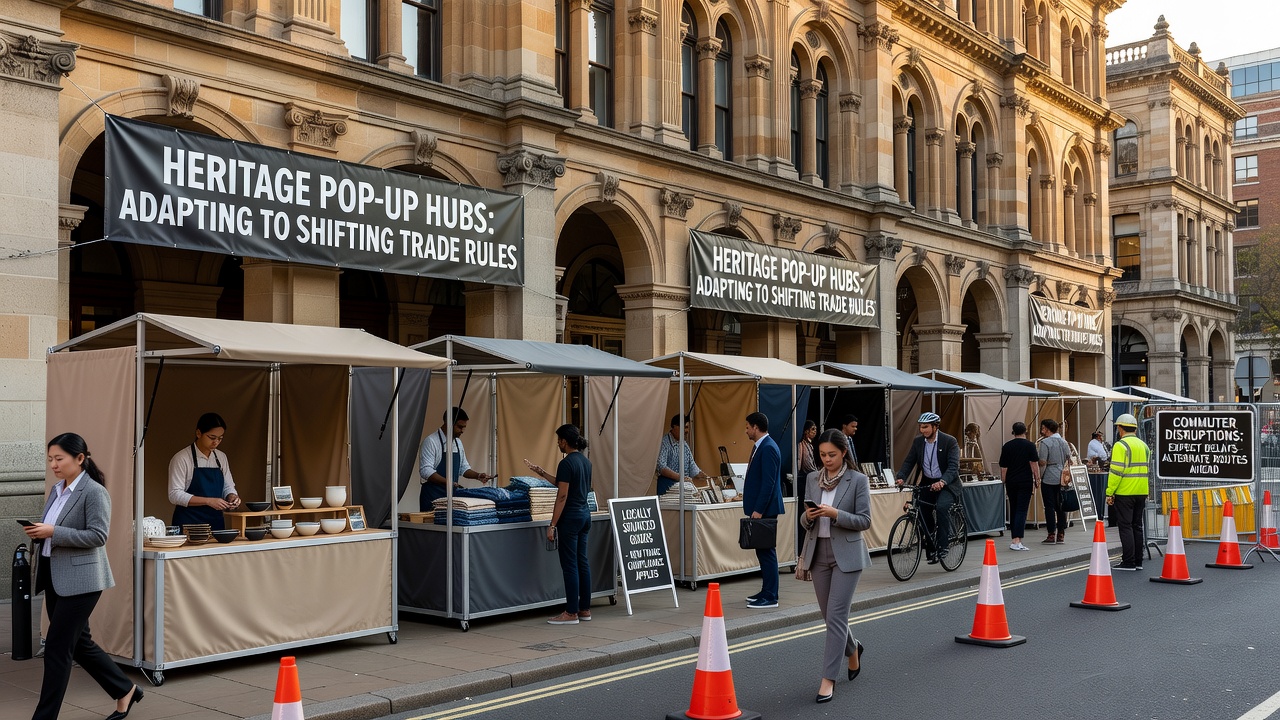
Market vendors have begun converting restored heritage buildings into temporary trading spaces across several urban districts in October 2026, and this shift comes as local authorities complete multiple restoration projects that opened former warehouses and civic halls to commercial use. Data from municipal planning departments shows that at least twelve sites now host rotating vendor stalls on weekdays, while the same locations accommodate weekend events that draw foot traffic from surrounding neighborhoods.
Restored sites become trading locations
Restoration work finished earlier this year at several properties listed on national heritage registers, and vendors secured short-term permits that allow them to install modular stalls inside these structures without permanent alterations to the original architecture. According to records from the regional heritage authority, the buildings include a 19th-century market hall and a former customs warehouse, both of which now feature pop-up configurations that operate during standard business hours. Figures released by the city economic development office indicate that vendor applications for these locations increased by 28 percent compared with the same period in 2025, reflecting higher demand for central spaces that already carry foot traffic from tourists and residents.
Operators coordinate schedules through a shared digital booking system managed by the local business association, and this arrangement lets different vendors occupy the same spot on alternating days while maintaining compliance with preservation guidelines. One study conducted by university researchers tracked occupancy rates and found that heritage sites recorded average daily attendance figures 15 percent higher than conventional street markets during the first quarter of 2026.
Commuter routes face ongoing adjustments
Construction activity around several heritage sites has required temporary rerouting of bus lines and pedestrian pathways, and transport authorities published updated timetables in September 2026 that reflect these changes. Commuters traveling through the affected corridors now encounter detours that add an average of seven minutes to peak-hour journeys, according to data compiled by the metropolitan transit agency. Vendors report that these disruptions reduce midday customer visits from nearby office districts, yet the same vendors note that evening foot traffic from cultural events at the heritage sites partially offsets the loss.
Traffic management plans include designated loading zones for vendors during early morning hours, and city engineers installed additional signage to guide both delivery vehicles and pedestrians around active work areas. Observers from the chamber of commerce documented that businesses located along the altered routes experienced a measurable dip in spontaneous purchases during the first weeks of the changes, while vendors who relocated inside the heritage buildings maintained steadier sales through pre-arranged group visits.
Trade regulations continue to evolve
New rules governing temporary commercial activity inside protected structures took effect in August 2026, and these regulations require vendors to submit environmental impact statements along with their permit applications. The updated framework also caps the number of consecutive days any single vendor may occupy a heritage site, a measure intended to distribute opportunities across a wider pool of applicants. Industry reports from the national trade ministry show that compliance costs for small operators rose by an average of 12 percent under the revised guidelines, prompting several vendors to form cooperatives that share administrative expenses.

Customs procedures for imported goods sold at these pop-up locations tightened as well, and vendors must now provide digital documentation for each shipment at least 48 hours before arrival. A report issued by the European trade facilitation network outlines how these requirements align with broader efforts to standardize cross-border commerce documentation across member states. Vendors who adapted early by adopting electronic inventory systems report fewer delays at inspection points, whereas those still relying on paper records encounter longer processing times during high-volume periods.
Adaptation patterns emerge among operators
Some vendors have introduced mobile payment options and pre-order systems that allow customers to reserve items in advance, reducing the need for extended on-site presence during peak commuter hours. Others have adjusted product ranges to emphasize locally sourced goods that face fewer documentation hurdles under the new trade framework. Records maintained by the vendor association indicate that 34 percent of participants in heritage-site markets now offer at least one digital ordering channel, up from 19 percent at the start of 2026.
Case examples documented by local economic analysts include a cooperative of textile sellers that consolidated three separate operations into a single heritage-site stall, and a produce vendor who shifted delivery schedules to avoid morning rush periods created by construction detours. These adjustments appear in quarterly performance summaries released by the city commerce board, which track sales volume and permit compliance rates across all participating sites.
Conclusion
Market vendors continue to balance the advantages of heritage-site locations against the logistical challenges of commuter rerouting and regulatory updates, and the patterns observed through October 2026 suggest that further adjustments will occur as restoration projects expand and trade documentation systems mature. Municipal records and vendor association data together provide a running account of how these spaces function under current conditions.